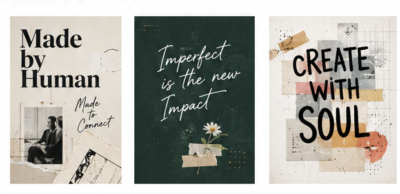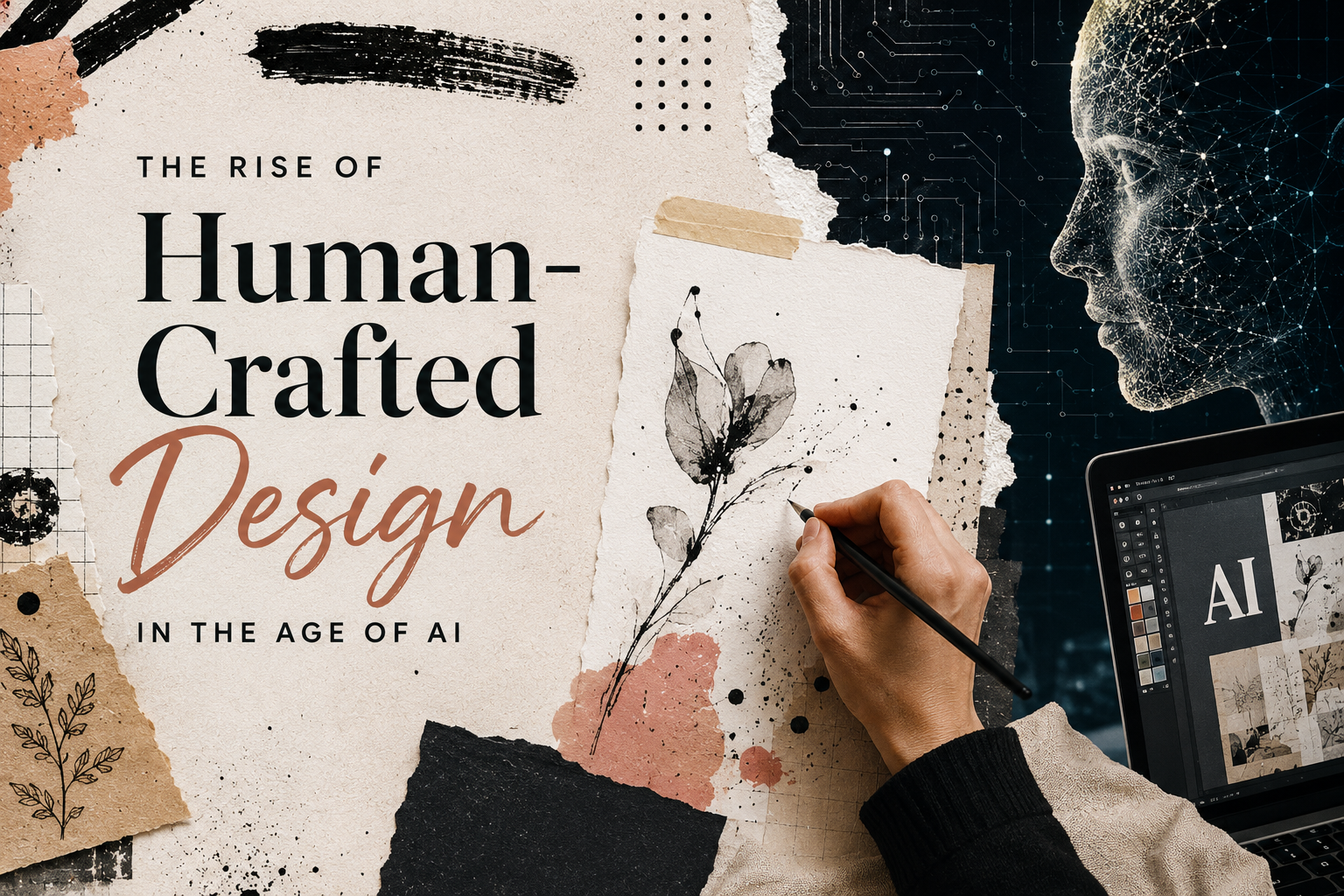
Why imperfect, tactile and personal design is becoming the new visual language
Artificial intelligence has changed the way designers work. From generating images and exploring concepts to creating layouts and visual variations, AI can now accomplish in seconds what once took hours. But interestingly, as AI-generated visuals become more common, designers are moving in the opposite direction—towards work that feels more human.
In 2026, one of the most interesting developments in graphic design is the growing appreciation for imperfection, texture and human craftsmanship. Current design forecasts point towards tactile materials, candid photography, collage, grain and deliberately imperfect details as ways of creating warmth and individuality.
When Perfect Starts Feeling Ordinary
AI is exceptionally good at producing polished visuals. But when thousands of brands and creators have access to similar tools, visual perfection can quickly become predictable. This has created an interesting design paradox: the easier it becomes to create something perfect, the more valuable something personal becomes. A slightly uneven handwritten line, a scanned piece of paper, a grainy photograph, a rough brushstroke or an imperfect collage can communicate something that a perfectly generated image sometimes cannot—personality.
The Return of Tactile Design
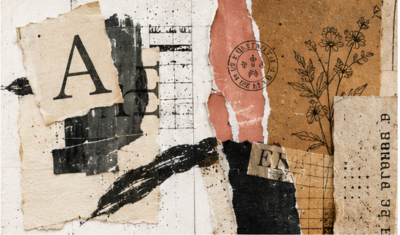
One of the strongest visual directions emerging now is tactile design.
Designers are experimenting with:
- Paper and fabric textures
- Hand-drawn illustrations
- Grain and subtle noise
- Torn-paper and collage effects
- Handwritten typography
- Ink marks and rough edges
- Imperfect photography
These elements create the feeling that a design has been made rather than simply generated. The result can feel warmer, more authentic and more memorable.
AI Doesn’t Have to Be the Enemy
The future isn’t necessarily about choosing between AI and human creativity. Instead, the strongest approach may be human-led, AI-assisted design. AI can help designers brainstorm ideas, explore visual directions and speed up repetitive tasks. The designer remains responsible for the concept, emotion, cultural context, visual decisions and final creative direction. That distinction matters because design is not simply about making something beautiful. It is about communicating an idea and creating a connection with people. Recent discussions around branding also highlight a similar shift: as AI makes attractive imagery easier to produce, authenticity, meaning and emotional connection become increasingly important ways for brands to stand apart.
Designing for a More Human Future
Perhaps the biggest design trend of 2026 isn’t a particular colour palette, font or layout. It is personality.
As technology makes creation faster, designers have an opportunity to slow down and ask better questions: What makes this design mine? What story does it tell? What will make someone remember it?
The future of design may therefore belong not to AI versus humans, but to AI with humans—where technology provides the possibilities and human creativity provides the meaning.Because in a world full of perfect images, being unmistakably human might become the most powerful design choice of all.